4 Things Could Save a Life
Together, we can champion mental health and prevent suicide one conversation at a time.
How would you feel if you lost a loved one to suicide and then thought, "I wish I had know they were struggling and reached out." Losing a loved one to suicide is devastating, and learning afterward that it might have been preventable only deepens the pain. The stigma around mental health keeps people silent, which prevents crucial conversations from happening—conversations that could make all the difference.
Our community lost 5 young men. We wish we had known. Known the warning signs. Known how to have a conversation. Known how to get help. We wish they’d known; it’s a life worth living. We can’t go back in time, so this is why we are telling you. Listen to #Our Story
In a world where mental health struggles are becoming increasingly prevalent, it’s more important than ever to know how to support those in need. By talking about it, we not only save lives but also build stronger, more compassionate communities.
Suicide is preventable.
Here are four key things that can help anyone make a difference—and one day, save a life.
Recognize the signs
Create a connection through conversation
Encourage and refer for help
Talk about it (be a safe space)
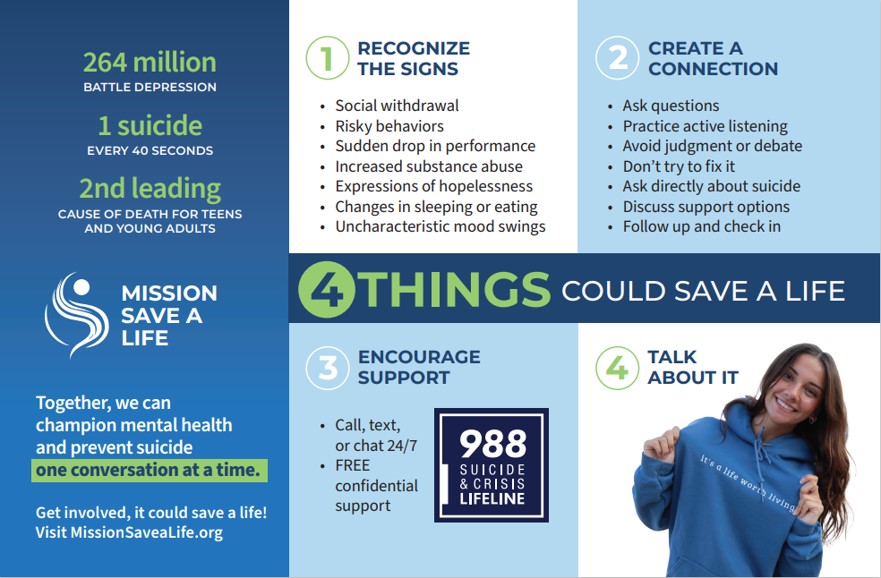
Take our online course here #4 Things Could Save a Life or read an overview below.
1. Recognize the Signs
Mental health challenges can often go unnoticed, especially when someone is hiding their pain and feeling like a burden. It’s crucial to learn the common signs of distress, such as:
Withdrawal from social activities
Uncharacteristic mood swings or irritability
Sudden changes in sleeping or eating habits
Increased substance abuse or risky behaviors
Loss of interest in previously enjoyed activities
A noticeable drop in performance at work or school
Expressions of hopelessness or feeling like a burden
While these signs may vary, the key is to notice changes that seem out of the ordinary for that person. The earlier you recognize these signals, the sooner you can offer support. Early intervention can help prevent a crisis from escalating.
Action Step: Educate yourself on the warning signs of suicide. Many organizations, including the National Suicide Prevention Lifeline, provide helpful resources for identifying when someone may be at risk. Keep an open line of communication with loved ones and check in regularly.
Take this course to learn more: #4 Things Could Save a Life Lesson #1️⃣ Recognize the Signs
2. Create a Connection Through Caring Conversation
Once you've noticed signs of distress, the next step is to create a connection by starting a thoughtful conversation. Assume no one else is reaching out and be the one to initiate. Though it can be uncomfortable, talking openly about mental health can create a safe space for someone to share their struggles—and could save a life. Many individuals feel like a burden and are unlikely to reach out, so approaching the conversation with empathy and non-judgment can make all the difference.
Use the following 7-step conversation guide to help guide your discussion:
Initiate the conversation: “I noticed you haven’t been yourself lately, are you okay?” This shows that you care and have noticed changes in their behavior.
Ask open-ended questions and just listen: Allow them to share at their own pace without interrupting or steering the conversation.
Avoid judgment or downplaying their experience: Acknowledge their emotions without minimizing them or offering clichés like “things could be worse.”
Avoid trying to fix things immediately: Your role is to listen, not provide solutions.
Ask directly about suicide: “Are you thinking about taking your own life?” Asking directly often provides a sense of relief that allows them to open up.
Discuss options for support: “Would you like help finding someone to talk to?”
Follow up: Check in the next day to let them know it’s okay to talk and that you're here if they need anything.
Action Step: Practice active listening. Show empathy by being fully present in the conversation, reflecting on their feelings, and letting them guide the discussion. You don’t need to know all the answers—your presence alone is often the greatest gift.
Take this course to learn more: #4 Things Could Save a Life Lesson #2️⃣ Create a Connection
3. Encourage Support and Refer for Help
Once someone opens up, encourage them to seek professional help. Let them know they don’t have to face their challenges alone, and there are professionals trained to guide them through it. It’s important to remind them that seeking help is a sign of strength, not weakness. Therapy, support groups, or even speaking with a trusted doctor can be crucial. You might need to assist with finding resources or even offering to go with them to an appointment.
Emphasize that help is available, whether through counseling, crisis hotlines, or other mental health resources. Breaking the stigma around seeking help is vital—mental health care is just as important as physical health care.
Action Step: Be proactive. Have a list of resources ready, including hotlines and local therapists.
If you or someone you love is in immediate need of mental health support, don’t hesitate to seek help right away. You can call, text, or chat with available national resources:
988 Suicide & Crisis Lifeline: Call, text, or chat 988 for immediate crisis support, available 24/7.
Crisis Text Line: Text HOME to 741741 to connect with a trained crisis counselor.
Take this course to learn more: #4 Things Could Save a Life Lesson #3️⃣ Encourage Support
4. Talk About It (Be a Safe Space)
The stigma around mental health keeps people silent, which prevents crucial conversations from happening—conversations that could make all the difference.
The Problem: Silence.
Fear, shame, and misunderstanding often lead people to hide their struggles, making early interventions less likely.
Research shows that early intervention and connection save lives. Talking about mental health breaks down barriers, reduces stigma, and creates a safe space for people to seek help. The CDC reports that addressing mental health early can significantly reduce suicidal ideation and behaviors.
The Solution: Talk About It.
It’s not just about recognizing the signs—it’s about creating a culture where it’s okay to talk about struggles. Normalize these conversations early with family, friends, and even coworkers. Don’t wait until a crisis arises. Conversations are a gateway to support, helping to prevent crises before they escalate. By creating safe spaces in everyday life, we reduce the stigma and encourage others to reach out before it’s too late.
Call to Action: Join #TalkTo10.
Using our It’s a Life Worth Living 4 Things campaign kit (postcards, infographics, whitepapers, etc.), educate yourself on the 4 things everyone should know. Then, reach out to 10 people—share the resources, have a conversation, and let them know you’re a safe space for future discussions. Encourage them to pass it on, creating a ripple effect of awareness and support. One conversation could save a life.
Take this course to learn more: #4 Things Could Save a Life Lesson #4️⃣ Talk About It
By recognizing the signs, initiating heartfelt conversations, offering referrals, and normalizing conversations around mental health, we can all become champions for mental health and suicide prevention. It’s not about having all the answers, but about showing up, being there, and offering support where it’s needed most.
Our #MissionSaveALife
#MentalHealthMatters
#SuicidePrevention
#LifeWorthLiving
#TalkAboutIt